 Spatyom

Four Keys to Understanding the Moon Phases
The Moon's phases aren't a mystery but the result of calculable geometry. When you see the Moon in the sky, thinking about where the Sun is, grasping the rise-set direction, and tracking the monthly orbital motion will instantly make the logic of the phases fall into place.
The Moon is the most familiar object in the sky, yet its phases often seem like a puzzle. However, the Moon's transition from crescent to full and back to darkness is not a random cycle; it is the inevitable result of the angles between the Sun, Earth, and Moon. In astrology, the dates of the New Moon and Full Moon are moments when this geometry is precisely calculated—so the phases are a matter of calculation, not guesswork. In this article, we will cover four fundamental keys to understanding the Moon phases; each will help you make sense of what you see from a different angle the next time you look at the sky.
The Half-Lit Sphere in the Sky
Let's start with the most basic fact: the Sun always illuminates only half of the Moon. Like Earth, the Moon has a "day side," and this side always faces the Sun. The Moon has no light of its own; the brightness we see is sunlight reflected from the Moon's surface. Therefore, when you look at the Moon, you actually see the boundary where the lit and dark hemispheres meet—this is called the terminator line.
So why don't we see the same amount of light every night? Because as the Moon moves along its orbit around Earth, our viewing angle changes. Over a month, we see different proportions of the Moon's lit half. At the New Moon, the lit side is completely turned away from us; at the Full Moon, it faces us entirely. In the days in between, this proportion constantly changes, and this very change creates what we call phases. So a phase is not a physical change in the Moon itself but entirely a matter of perspective. The Moon's surface is always the same; what changes is our viewpoint of that surface.
Clarifying this distinction in your mind will make all the following sections easier to understand. The crescent you see in the sky does not mean a part of the Moon has disappeared; it simply means that at that moment, sunlight falls only on a small portion of the face visible to us. This understanding is the cornerstone of learning the Moon phases.
When You See the Moon, Think of the Sun First
The first practical key to understanding the phases is this: every time you see the Moon, try to imagine where the Sun is in the sky. Because the only thing that determines which phase the Moon will appear in is the angle between it and the Sun relative to its position in the sky. Memorizing the phases without considering this angle is like finding your way without a map—it sometimes works, but you never grasp the logic.
A practical exercise: when you see a thin crescent on the western horizon one evening, recall the point where the Sun has just set. If the crescent is near the direction where the Sun set, it indicates that the Moon is in its waxing phase, because it means the Moon is setting after the Sun. Conversely, a Moon appearing on the eastern horizon late at night means it has passed the Full Moon, indicating a waning phase. Recording these observations over a few weeks will help you intuitively grasp the logic of the phases.
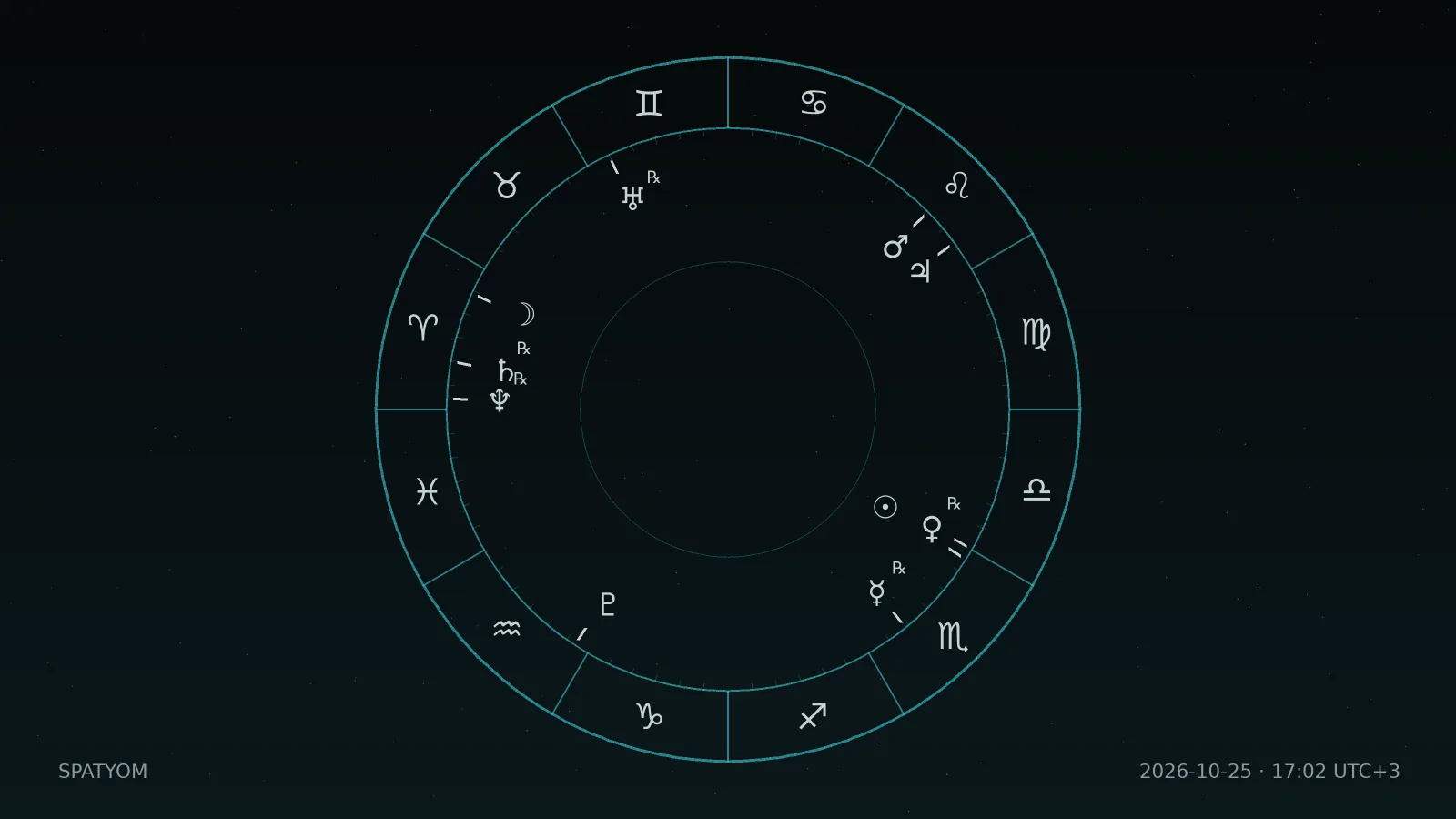
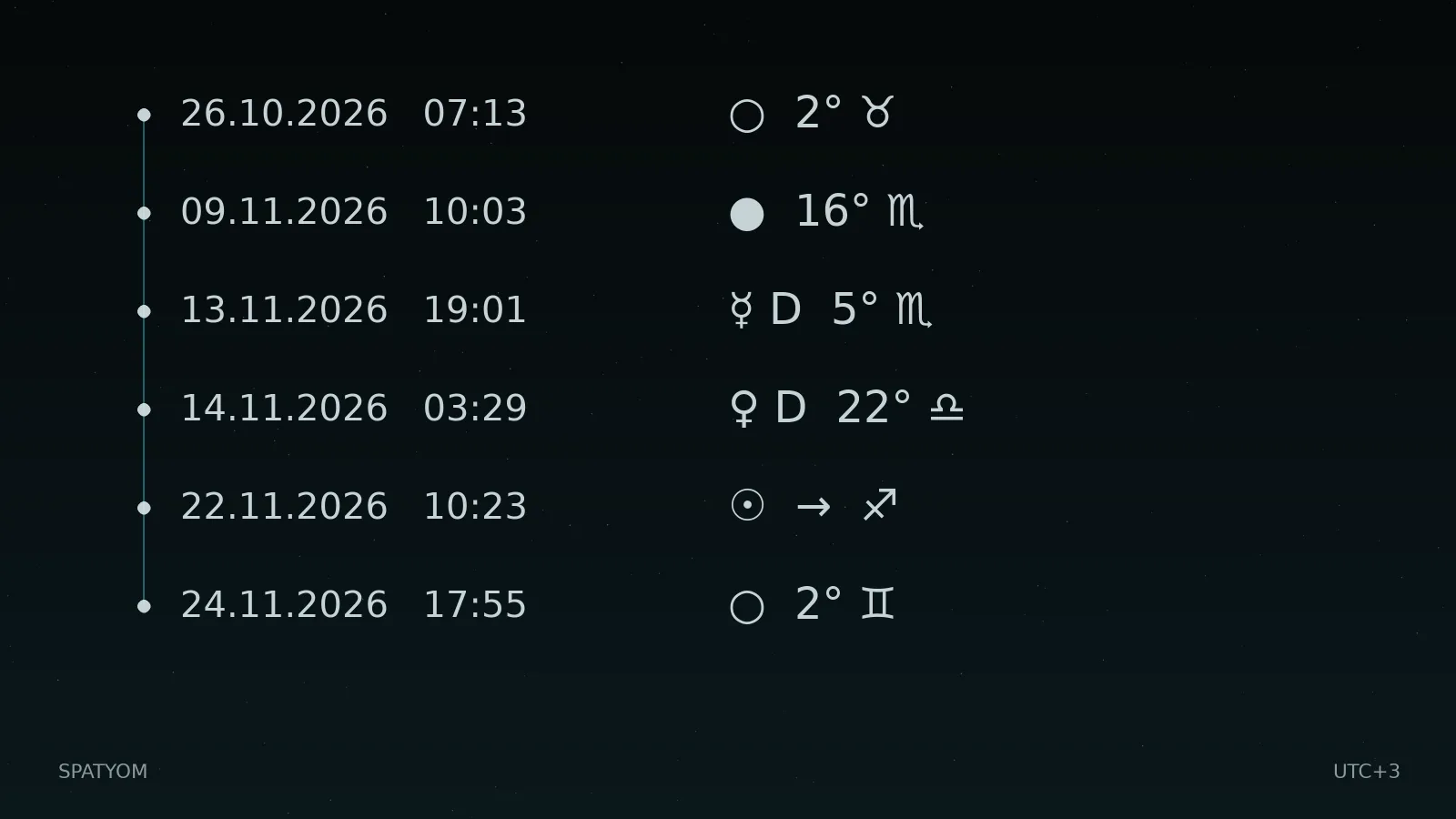
In astrology, there are special moments of this geometry: when the Sun and Moon meet in the same sign and degree, it is a New Moon; when they are exactly opposite, it is a Full Moon. For example, on November 9, 2026, a New Moon will occur in Scorpio; at that time, the Moon aligns with the Sun and becomes invisible in the sky. Conversely, on November 24, 2026, during the Full Moon in Gemini, the Moon will shine directly opposite the Sun. Knowing these dates shows that the phases are not only observational but also calculable events.
The Moon Rises in the East and Sets in the West Every Night
The second key concerns the Moon's daily motion. Like all celestial bodies, the Moon rises in the east and sets in the west—this is a result of Earth's rotation on its axis. Because Earth rotates eastward, celestial bodies appear to rise from the eastern horizon and move westward. Therefore, the thin crescent you see on the western horizon after sunset is actually a setting Moon, not a rising one.
This observation is often surprising because people generally think of the crescent as the "newborn Moon." However, that crescent rose shortly after the Sun in the morning, followed the Sun across the sky all day, and became visible on the western horizon after the Sun set. It was not noticed during the day because it was lost in the Sun's brightness. Knowing that the crescent in the west actually rose that morning fundamentally changes your perception of the sky.
This understanding also explains why the Moon appears in different parts of the sky on different nights. While Earth's rotation determines the daily appearance, the Moon's own orbital motion moves it to a different position each night. When the two motions combine, you find the Moon a little farther east and a little later each night. Learning to distinguish these two motions is the key to understanding why the phases constantly change.
One Month, One Orbit: The Moon's Monthly Journey
The third key is the Moon's orbital motion. The Moon completes one revolution around Earth in about a month. Along this orbit, it shifts about 12-13 degrees eastward in the sky each day relative to the fixed stars. This is a much slower motion than the daily rise-set movement and requires careful observation. When you look at the Moon during the day, you see it moving westward; this is the apparent motion caused by Earth's rotation. The orbital motion, however, is much slower and eastward.
The easiest way to notice the Moon's orbital motion is to observe it at the same time every day. One night, note the Moon next to a particular star; the next night at the same time, look again. You will see that the Moon has shifted eastward relative to that star. This is the Moon's true motion around Earth, and a consistent observation habit will easily make this subtle movement visible.
This monthly orbit plays a critical role in the formation of phases. As the Moon moves along its orbit, its position relative to the Sun constantly changes. As it shifts east of the Sun, we see the waxing phases (from crescent to Full Moon); as it moves west of the Sun, we see the waning phases (from Full Moon to New Moon). So the orbital motion constantly changes the angle between the Sun and the Moon, creating the sequential series of phases. In the astrological calendar, this cycle manifests as the dates of the New Moon and Full Moon each month; for example, on December 9, 2026, a New Moon will occur in Sagittarius, and on December 24, 2026, a Full Moon will occur in Cancer.
Why Does the Moon Rise About 50 Minutes Later Each Day?
The fourth and final key is the systematic delay in the Moon's rising times. Because the Moon shifts 12-13 degrees eastward in its orbit each day, Earth must rotate a little more to bring the Moon to the same position. This extra rotation corresponds to an average delay of about 50 minutes. So the Moon rises about 50 minutes later each day compared to the previous day. This is why the Moon appears in a completely different part of the evening sky within two weeks.
This delay is the most concrete indicator of how the phases progress. In the two weeks from New Moon to Full Moon, the Moon rises a little later each evening and is positioned a little farther east in the sky. In the two weeks from Full Moon to New Moon, the Moon rises late at night and becomes visible in the sky toward morning. This regular delay allows you to estimate which phase the Moon is in even without a calendar.
Applying this knowledge to daily life is quite easy. If you cannot see the Moon in the sky one night, it has probably not risen yet or has already set. The next night at the same time, you are likely to find it because it will rise about 50 minutes later. This simple observation helps you intuitively grasp the Moon's position in the sky over time and brings the logic of the phases into your daily life.
Combining the Phases with the Astrological Calendar
In astrology, the Moon phases are read not only as a celestial event but also as a rhythm of time. The New Moon marks the beginning of a new cycle; the Full Moon indicates a peak and an awareness. The waxing and waning phases between these two extremes symbolize the step-by-step progression of a process. But remember: these interpretations speak in the language of a tradition; the sky itself is merely calculable geometry.
Looking at the autumn of 2026, the sky calendar clearly shows this rhythm. The cycle that began with the New Moon in Virgo on September 11 reached its peak with the Full Moon in Aries on September 26. Then, on October 10, a new New Moon occurred in Libra; the next Full Moon will take place on October 26, 2026, at 07:13 (Turkey time) in Taurus. This regular rhythm reminds us that the Moon's journey in the sky is an uninterrupted cycle, and each month has its own unique tempo.
Following these cycles strengthens the habit of observing the sky. Noting each New Moon and Full Moon date allows you to know in advance when the Moon will be visible and when it will be invisible. Thus, when you look at the Moon, you rely on knowledge rather than guesswork to understand its phase. This is precisely astrology's claim: the timing of celestial events is calculated, and interpretation is built upon that calculation.
Reinforce with Observation
All this information gains meaning only when combined with observation. On the next clear night, go outside and think about which direction the Moon is in and where the Sun set. For a few weeks, look at the Moon at the same time and watch how its position in the sky changes. The phases, which seem complicated at first, become self-evident with this simple habit.
Understanding the Moon phases is the most accessible way to learn the language of the sky. You don't need a telescope or special equipment; only attention and a little patience are enough. Think of the Sun, remember the rise-set direction, track the monthly orbit, and notice that 50-minute delay. When these four keys come together, the Moon is no longer a puzzle but the most understandable guide in the sky.
Comments
No comments yet. Be the first.