 Spatyom

Gegenschein: The Ghostly Glow of Interplanetary Dust
A faint patch of light appears in the sky directly opposite the Sun: Gegenschein. In this article, we explain what this ghostly phenomenon is, why it occurs, and how you can see it with the naked eye.
Directly opposite the Sun in the sky, there is a faint patch of light that can only be discerned on the darkest nights. Among astronomy enthusiasts, this phenomenon is regarded almost like a trophy and is called gegenschein, or in its commonly used name, counterglow. At first glance, it might be mistaken for a star cluster or a nebula, but in reality it is nothing more than sunlight striking and reflecting off dust particles in the interplanetary void. In this article, we will examine the origin of this phenomenon, the physics that makes it special, and how you can reach it step by step as an amateur observer.
What is Gegenschein and why is it so hard to see?
Gegenschein is a very faint and diffuse glow that appears in the night sky directly opposite the Sun, that is, around the antisolar point. This light, with a diameter of about 10 degrees, can only be noticed even under the best conditions after your eyes have fully adapted to darkness. The source of the light is the microscopic dust grains that stretch along the ecliptic plane of the Solar System and fill the interplanetary void. These dust particles reflect sunlight and create an increase in brightness especially in the region directly opposite the Sun. However, this brightness is almost at the same level as the faintest parts of the Milky Way; therefore, seeing it requires patience and experience.
Many amateur astronomers have heard the name gegenschein, but very few have actually seen it; even fewer have been able to photograph it. There are several reasons for this: light pollution, humidity and dust in the atmosphere, or even a bright planet in the same region can completely overpower this faint light. Moreover, gegenschein is not an object to be viewed through a telescope; it is observed with a wide field of view and with the naked eye, or at most with a wide-angle camera. Therefore, catching it is considered one of the most patience-demanding pursuits of sky observing.
On the other hand, gegenschein does not remain like a fixed object in the sky. Its position in the sky changes throughout the year because the antisolar point shifts depending on the Sun's movement in the sky. For this reason, you need to choose the time and direction in which you will look for it carefully. We will discuss this in detail below.
Interplanetary dust: an invisible disk
To understand gegenschein, one must first know the material that creates it. The interplanetary void is not completely empty as is often assumed; it is filled with a giant dust disk stretching along the ecliptic plane of the Solar System. The sizes of the particles in this disk range from one thousandth of a millimeter to one millimeter. Most arise as a result of asteroid collisions and the erosion of comets. Some of this dust may even originate from dust storms on Mars.
This dust cloud is a dynamic structure; the particles are in constant motion. The smallest particles are driven out of the Solar System by the solar wind. The larger ones either collide with other bodies or slowly spiral inward and fall into the Sun. However, asteroid collisions and the disintegration of comets ensure that this dust is continuously replenished. Therefore, interplanetary dust is not a remnant left over from billions of years ago, but a rather young and constantly changing structure. From an astronomical perspective, the age of this dust is only a few million years.
Although we cannot see the dust disk directly, we can observe its effects in the sky. The cone-shaped zodiacal light that appears on the horizon before sunrise or after sunset is the brightest appearance of this disk. Gegenschein, on the other hand, is the illumination of the part of the same disk directly opposite the Sun.
The difference between zodiacal light and counterglow
There are two main phenomena in the sky that reveal Solar System dust: zodiacal light and gegenschein. Zodiacal light appears as a bright cone stretching along the ecliptic shortly after sunset or before sunrise. Especially during periods when the ecliptic is high in the sky, it can be easily noticed from anywhere far from light pollution. This brightness results from sunlight being scattered forward by dust particles.
Gegenschein, on the other hand, appears in the exact opposite direction of the zodiacal light, that is, on the opposite side of the Sun. The brightness here increases because the dust particles are illuminated by the Sun from directly behind us and because of the opposition effect. Thanks to this effect, gegenschein appears somewhat brighter than other parts of the zodiacal band. However, it is still not as distinct as the zodiacal light, because the light is much more diffuse and faint. While seeing the zodiacal light with the naked eye is relatively easy, gegenschein requires special conditions.
Unlike the zodiacal light, gegenschein is not visible at every time of the year. Especially in December, June, and July, it cannot be noticed because it remains in the same direction as the bright regions of the Milky Way. In addition, bright planets such as Mars or Jupiter, when at opposition, can be in the same region and overshadow it. Therefore, hunting for gegenschein requires taking the general state of the sky into account.
The opposition effect: why does it shine directly opposite the Sun?
To understand why gegenschein is brighter than other regions, one must look at the concept of the opposition effect. This effect causes an object directly opposite the Sun to appear brighter as it reflects sunlight back. The main reason for this is known as shadow hiding: when the Sun illuminates the dust particles from directly behind us, they become fully illuminated and their shadows become invisible. Thus, the amount of reflected light increases.
You can observe this effect in everyday life as well. On a sunny day, when you look at a rough surface, you notice a slight difference in brightness around your own shadow. This is the manifestation of the opposition effect on the ground. Similarly, during a full moon, there is a noticeable increase in the brightness of the Moon, because the Moon is also at opposition. The rings of Saturn also shine noticeably on the days of opposition. Gegenschein is one of the most elegant examples of the same physical principle in the interplanetary dust disk.
However, the absolute brightness is still very low; therefore, the sky must be extremely dark to see it. Although the opposition effect increases the light reaching the observer's eye, the dust itself is extremely sparse. For this reason, gegenschein remains a ghostly glow that can be discerned with the naked eye only under ideal conditions.
Five tips for observing Gegenschein
If you want to see gegenschein, you first need to be in the right place at the right time. Here are five essential tips to make this challenging hunt easier:
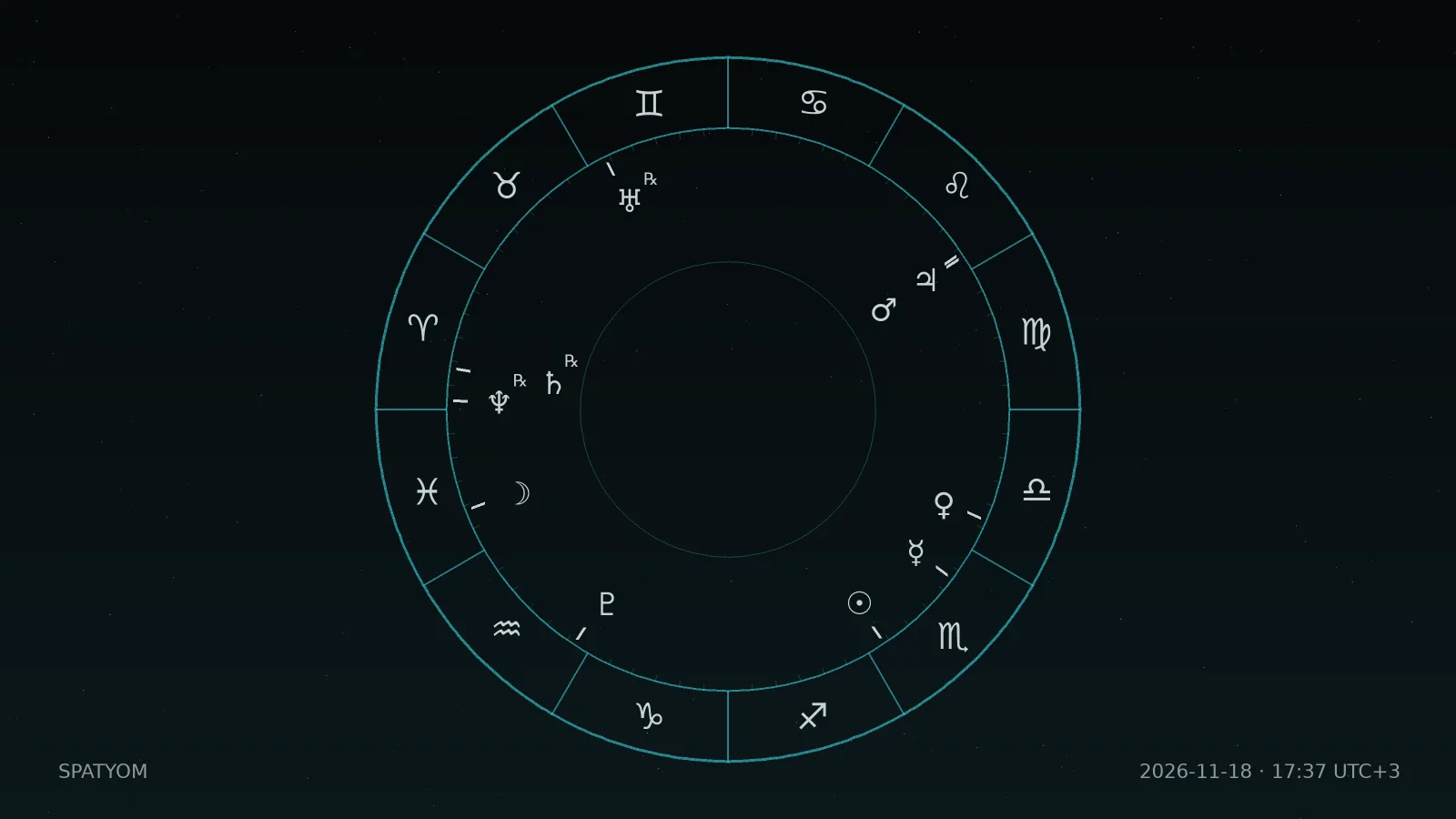
- Check the position: Gegenschein is located at the antisolar point, that is, directly opposite the Sun. This point reaches its highest position around midnight. Using a planetarium app or a star chart, determine which constellation the antisolar point is in that night. For example, in mid-November it shines between the constellations Taurus and Perseus. Also, remember that it is invisible during the summer months and in December because it overlaps with the Milky Way.
- Wait for the highest point: Gegenschein reaches its highest point above the horizon around midnight. In the Northern Hemisphere, it is highest near the winter solstice, that is, in December; however, it cannot be seen during that period due to the Milky Way obstruction. Therefore, the best months are November and January. In the Southern Hemisphere, May and August can be tried. Also, make sure the Moon is not above the horizon.
- Choose a dark observing site: Gegenschein can never be seen from locations with light pollution. Even a moderate level of light pollution completely erases it. Even for experienced observers, the sky brightness at the zenith must be at least 21.0 magnitudes per square arcsecond; for first-timers, 21.2 or better is recommended. Such dark skies are found in mountainous regions far from cities.
- Watch the weather conditions: A clear night is not enough; the atmosphere must be extremely transparent. For this, the air must be dry and free of dust. At mid-latitudes, these conditions usually occur after cold front passages. Check humidity and visibility information from astronomy weather forecast sites.
- Improve your observing skills: Full dark adaptation takes at least 45 minutes; during this time, stay away from phones and bright lights. However, you can use very dim red light. Also, try the averted vision technique: instead of looking directly at the object, look slightly to the side and use the edge of your field of view. This activates the part of your eye that is more sensitive to low light.
Gegenschein photography: patience and technique
Photographing gegenschein is even harder than seeing it with the eye. However, with the right equipment and technique, it is possible to image this ghostly light. First, you need a wide-angle lens (for example, 16 mm) and a star-tracking tripod. A mechanical or motorized tracking device is essential to prevent star trailing during long exposures. For example, the Project Nightflight team took 23 unfiltered exposures of 4 minutes each with a Baader-modified Canon 1100D at f/5.6 with a 16 mm lens and used a mechanical Mini Track LX2 for sky tracking.
Taking multiple exposures and stacking them with software reduces noise and makes gegenschein more distinct. Post-processing may require increasing contrast, because the light is truly very faint. Remember, most of the gegenschein photos you see on the internet have undergone intense contrast enhancement. When you see it with the naked eye, it will not be this distinct. Nevertheless, this experience can be an unforgettable moment that strengthens your connection with the sky.
Experienced astrophotographers such as Project Nightflight emphasize that the ideal conditions for capturing gegenschein are rare. For example, in an observation made on the island of La Palma in 2019, the sky brightness reached 21.4 magnitudes per square arcsecond, and gegenschein was easily visible with the naked eye. However, such darkness is not always possible. Still, it is worth trying with patience.
Gegenschein and the sky calendar: when to look for it?
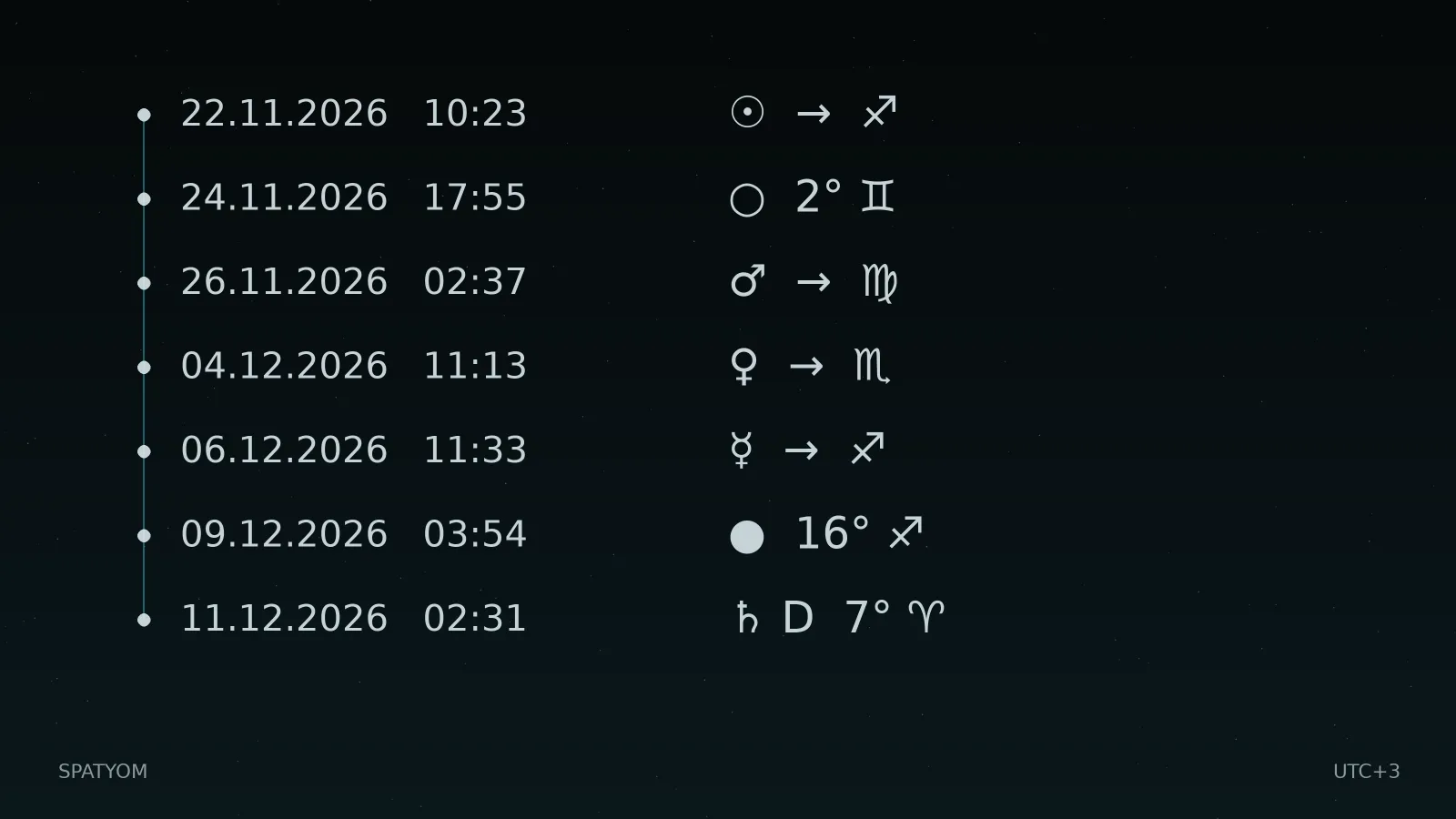
Choosing specific periods of the year is important for observing gegenschein. In the Northern Hemisphere, the best opportunities are in November and January, because during these months the antisolar point is high at midnight and does not overlap with the bright regions of the Milky Way. Also, around midnight the Moon must not be above the horizon; this condition is most easily met on the nights around the new moon. The next new moons are on December 9, 2026 (03:54 TRT, Sagittarius) and January 7, 2027 (23:26 TRT, Capricorn). In December, gegenschein becomes invisible because it remains in front of the Milky Way. Therefore, in the Northern Hemisphere, the real opportunity is the moonless January nights around the New Moon of January 7, 2027.
Gegenschein is not a concept directly related to astrology; however, it is an important experience for sky observers and astronomy enthusiasts. Astrology interprets the positions and movements of celestial bodies in a symbolic language. Gegenschein, on the other hand, is a physical event and carries no astrological meaning. Nevertheless, knowing the sky can also be eye-opening for those interested in astrology. There is much more to explore in the fascinating world of the sky.
Comments
No comments yet. Be the first.