 Spatyom

North Node in Astrology: The Marker of Spiritual Direction in the Chart
The North Node is not a physical celestial body in the birth chart; it is a calculable point where the Moon's orbit intersects the ecliptic. The North and South Nodes are read as a pair, and this article covers what the nodes mean, their sign placements, and frequently asked questions.
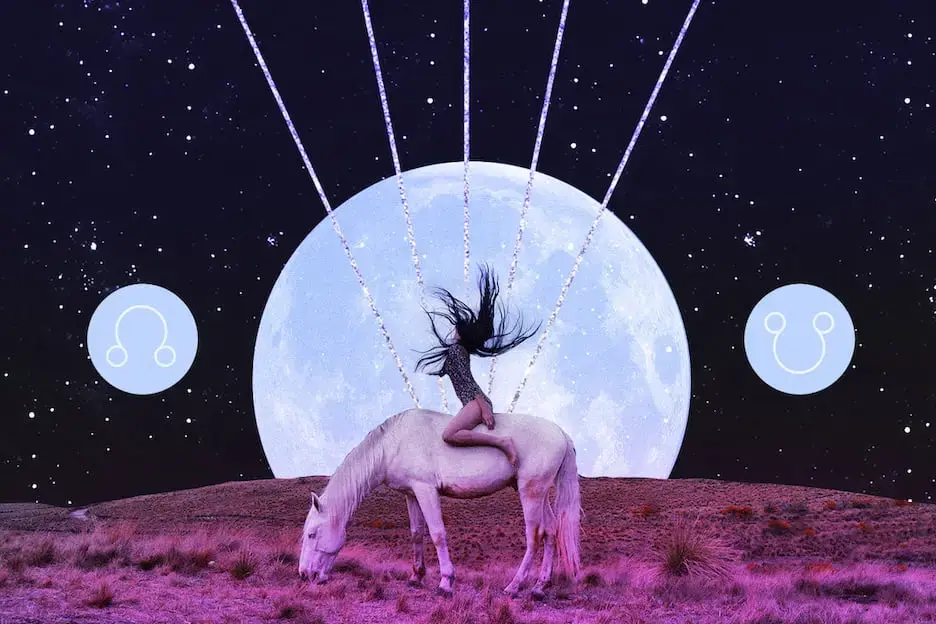
You look for a shining planet in the birth chart, and a reversed horseshoe appears before you. The North Node is exactly this: a calculated point that does not shine, does not give light, but determines the chart's direction. It sits where the Moon's orbit intersects the ecliptic plane; that is why it does not look like a planet, nor does it behave like one. Yet it is one of the most discussed points in astrological tradition, because it describes not "who you are now" but "which direction you are growing toward."
What Is the North Node and Where Does It Sit?
As the Moon revolves around the Earth, its orbit does not travel on a fixed plane; it is slightly tilted. This tilted orbit has two points where it intersects the ecliptic plane, which defines the Earth's path around the Sun. One of these points is called the North Node, and the other the South Node. The two stand directly opposite each other in the sky, always 180 degrees apart. So whichever sign one is in, the other is automatically in the opposite sign.
The North Node is not a celestial body but an intersection point. This distinction matters: Mars's position tells you where a body is, while the node's position tells you where an orbit breaks. Astrological tradition has found this geometric point meaningful for centuries and calls it the "Nodes of Fate." However grand the name may seem, the nodes are not a verdict declaring fate but a description of a tendency and a direction.
In practice, the nodes always appear to move backward. In astronomy this is called regression: the intersection points slide backward along the ecliptic and complete a full cycle in about 18.6 years. That is why the nodes changing signs follows a much slower rhythm than the planets changing signs. People carrying the same node sign span a wide age range.
North and South Node: Two Halves of a Single Story
Reading the nodes separately is like looking only at a compass needle while ignoring its body. The North and South Nodes gain meaning as a pair. The South Node shows the area you were born with, where you flow easily, perhaps where you are too comfortable. The North Node points in the opposite direction, toward what requires effort and opens up over time.
There is a common mistake here: reading the South Node as "bad" or as a "weakness to be abandoned." Yet the talents the South Node gives are the tools you use while advancing toward the North Node. A writer can take their storytelling ability from the South Node and carry it into a new field. The problem is not the talent but leaning on it too much and not trying the new. The comfort zone is not a prison; growth only stops when you choose to stay there.
The South Node can also show where things are overdone. If an energy comes naturally, it is also easy to overdo it. The North Node is therefore a call to establish balance: not to abandon what you have entirely, but to cross over by using what you have. That is why node reading in astrology is done not as a "list of renunciations" but as a "list of directions."
In Which Areas Is the North Node Read?
When evaluating a node placement, three layers are examined: sign, house, and aspects. The sign gives the style and tone of that growth. For example, a Libra node speaks the language of compromise and relationship, while an Aries node emphasizes direct action and charting one's own course. The sign tells you not what you learn but how you learn it.
The house placement sets the stage. Whichever house the node sits in, that area of life becomes the laboratory for this growth. A node in the seventh house creates lessons in relationships, a node in the tenth house in career and visibility, a node in the fourth house in roots and home life. The house tells you where the node will show up in daily life, rather than remaining an abstract theme.
Aspects, meanwhile, connect the node to the rest of the chart. An aspect formed with a planet such as the Sun, Moon, Saturn, or Jupiter carries that growth theme to the center of the personality. Without aspects, the node works more quietly; with them, it is constantly nudged from another part of the chart. Stating a sign name alone without reading these three layers together means reading half the chart.
North Node Themes by Sign
The headings below offer a general framework; the house and aspects of the node in your own chart change how these themes operate.
- Aries: Leadership, putting your own goal first, trusting courage and instinct.
- Taurus: Discovering personal value, setting boundaries, growing stronger together in relationship.
- Gemini: Finding your own voice, expressing your needs, standing by your own point of view.
- Cancer: Embracing emotions, letting go of control, learning to receive care.
- Leo: Sharing the stage, nurturing creativity, balancing the ego with humility.
- Virgo: Establishing conscious routines, softening the inner critic, doing your work with mastery.
- Libra: Finding balance in relationship, separating your identity from others' opinions.
- Scorpio: Balancing the material and spiritual worlds, loosening obsessive patterns.
- Sagittarius: Exploring the unknown, expanding boundaries, learning to stay in the moment.
- Capricorn: Adding gentleness alongside firmness, connecting with the inner child, combining discipline with joy.
- Aquarius: Opening up to different views, claiming your own unconventional nature.
- Pisces: Balancing chaos with order, tying emotion to values, establishing a slower rhythm.
Do not read this list like a checklist. No one lives all twelve themes; the sign and house where your node sits show which two or three themes repeat constantly for you. Two people with the same sign can carry completely different node stories, given differences in house and aspects.
Finding the Node in the Birth Chart
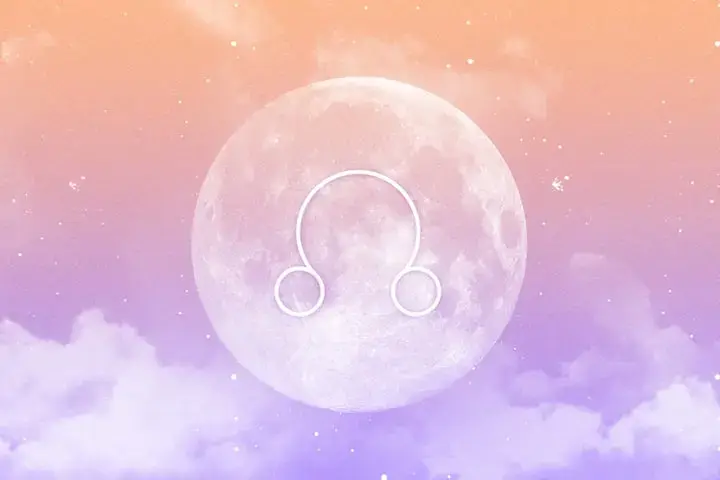
In a chart, the nodes are usually shown with two symbols shaped like a horseshoe, with small circles at their ends. The two sit in opposite houses and face each other; one is the North and the other the South. You tell which is which from the symbol's direction and the abbreviation most chart programs place beside it.
The node should not be confused with the rising sign. The rising sign is the sign ascending on the horizon at the moment of birth and defines your outward stance. The node is an entirely different layer and describes your direction of growth. Their falling in the same sign can be a meaningful overlap, but it is not a requirement. Likewise, the node is not synonymous with the Sun sign.
A technical detail: some ephemerides and chart programs offer a choice between the "True Node" and the "Mean Node." The true node accounts for small oscillations in the Moon's orbit; the mean node follows a smoother curve. The difference between them usually does not exceed one degree, but for a node very close to a sign boundary, which one you use can change which sign it appears in. In many sources, "True Node" is used synonymously with the North Node.
Frequently Asked Questions
How do I find my North Node?
You need to cast your birth chart and look for the horseshoe symbols in it. If your birth time is unknown, the house placement remains uncertain, but the sign placement can still be calculated. In charts cast without correctly entering the time zone and birth place, the node's degree can shift.
What happens if the node is retrograde?
In practice there is nothing to worry about. Depending on the calculation system used, the nodes almost always appear to move backward; this is their natural behavior. A retrograde node does not mean a problem or a warning sign in your chart.
Are the node and the rising sign the same thing?
No. The rising sign is the sign ascending at the moment of birth; the node is the point where the Moon's orbit intersects the ecliptic. They sit in different places in the chart and describe different layers.
How to Read the Node
Reading the North Node not as a to-do list but as a sense of direction is healthier. The node's sign tells you in what tone you grow, its house tells you where you practice, and its aspects tell you which part of your life this process connects to. Rather than drawing a definite fate from a single placement, these three layers should be evaluated together.
Remember: astrology is not a tool of prediction but a tradition of calculation. Which sign and degree your node is in can be calculated; the interpretation built on that calculation is a description of a tendency, not a verdict. The North Node does not tell you what will happen; it reminds you that there is an area that opens up wherever you put in effort.
Comments
No comments yet. Be the first.