 Spatyom

Pluto Neptune Sextile: The Quiet Call from the Depths
The sixty-degree angle between Pluto and Neptune points to a period that looks beyond the boundaries of the material world. Interest in unseen layers grows, and the inner search for meaning strengthens. Who does this transit touch, and when?
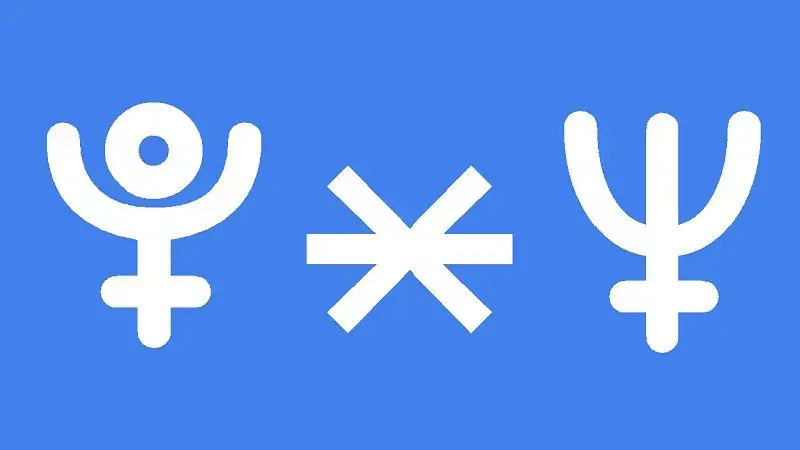
In the sky, two slow-moving planets, Pluto and Neptune, are connected by a sixty-degree angle. This angle is called a sextile, and it generally signifies opportunity, cooperation, and a quiet opening. Pluto represents deep transformation, power, and hidden layers, while Neptune symbolizes imagination, intuition, and the realm beyond the visible. When the two come together, the explanations of the material world begin to fall short; a person turns toward a deeper search for meaning. In this article, we will discuss what this transit means, at what ages it is effective, and how it might be felt in daily life.
Why Does the Sextile Open a Different Door?
In astrology, angles have character. While conjunction produces intensity, square produces tension, and opposition produces a search for balance, the sextile offers a softer but effective ground. This sixty-degree relationship between Pluto and Neptune is like a door that opens without force. No one pushes you in; but the door is open, and stepping through depends on you. Therefore, this transit works more like an inner invitation than an outer event. Still, the lightness of the sextile does not make it insignificant. On the contrary, it has an effect that passes unnoticed but changes direction in the long run. To notice it, one needs to pause a little and listen.
By Pluto's nature, this angle is about what lies beneath the surface. Repressed emotions, forgotten questions, postponed reckonings may remind themselves during this period. Neptune, in turn, makes these visible through dreams, symbols, intuitions, and artistic expressions. Their cooperation points to a period when you begin to decipher the language of the subconscious. This is not an obligation but an opportunity; whether to use it or not is up to you.
Who Does This Transit Touch, and at What Age?
Since Pluto and Neptune are slow-moving planets, this angle is not a period of a few weeks but one that can last from one year to eighteen months. Its effect is felt at different ages depending on the birth year. For those born in 1950, it corresponds to around age fifty-three; for 1960, around fifty-two; for 1970, around fifty-four. Those born in 1980 experience this transit at fifty-seven, those born in 1985 at fifty-nine, and those born in 1990 at sixty-two. In younger generations, the age range rises: those born in 2000 encounter this angle at seventy, those born in 2010 at eighty-one, and those born in 2020 at ninety-three.
This table shows that the transit generally coincides with maturity and later periods. However, for those born in 2035 and later, the situation reverses; this time the angle becomes effective at very early ages, even in childhood. So this is not only a theme associated with old age. Depending on the placement in the birth chart, the effect is timed differently and felt differently for everyone. Therefore, the general table is a guide, not a personal certainty.
The most striking aspect of this transit is that its effect is often silent. People frequently notice an inner shift without experiencing a major event. An old question reappears, a book comes into your hands, a conversation extends to an unexpected place. From the outside, nothing seems to have changed; inside, however, the ground slowly shifts. This is why such transits are difficult to research, because there is no concrete event to measure.
Why Do Material Explanations Fall Short?
During this period, the material perspective—that is, the tendency to explain everything through what is measurable and touchable—does not feel as satisfying as before. Neptune seeks the meaning behind the visible; Pluto seeks the power beneath the surface. Together, they strengthen the feeling that life cannot be explained by material goals alone. This does not mean you will suddenly shift to a mystical life. It is more a period when you realize that old explanations no longer suffice.
This awareness can turn big questions like death and life from abstract concepts into personal ones. This does not mean you should think about your own death and feel anxious. What it means is this: you no longer easily accept any explanation that ignores the meaning of life and death. This is a search for existential honesty rather than intellectual curiosity. Neptune blurs while Pluto deepens; what emerges is an impatience with superficial answers.
This tendency inevitably leads a person toward deeper readings, quieter observations, and less certain statements. Some people draw closer to areas such as meditation, journaling, or art during this period. Others begin to think about the meaning of life in a more abstract way. Whichever path is chosen, the common point is the same: a need for inward deepening.
The Language of Intuition, Symbol, and Art
Neptune is associated with intuition, dreams, symbols, and artistic expression. Pluto, with the powerful and sometimes disturbing content beneath them. During this transit, dreams may seem more meaningful, coincidences more striking, and a song lyric or a film scene may unexpectedly reveal something. These are not prophecies; they are ways the inner process comes into language.
For those engaged in art, this period can provide a fertile ground. However, this does not necessarily mean producing a work. Sometimes merely carrying an image for a long time, being caught by a color, or listening to a sound over and over is enough. Neptune's language is not direct; it speaks through hints, associations, and ambiguities. Pluto's contribution is to make one aware of the powerful emotion underlying this ambiguity.
- Recording dreams can help understand the symbolic language of the period.
- Silence and solitude can sharpen intuitive perception.
- An artistic pursuit can make the inexpressible visible.
- Contact with nature can balance Neptune's dispersing energy.
The common point of all these is not waiting for an instruction from outside. This transit does not tell anyone what to do; it only opens a space to look inward. Filling that space is entirely a personal choice.
How Should This Period Be Evaluated?
In such a transit, the healthiest approach is not to see it as a disaster or a salvation. Periods when Neptune and Pluto work together promise neither a great enlightenment nor herald a destruction. They only increase the tendency to deepen. Noticing this tendency is the first step to directing it. An unnoticed process, on the other hand, passes silently and leaves behind only a slight unease.
In daily life, this can mean less noise and more listening. The cycle of shopping, consumption, and quick gratification may seem less attractive during this period. Instead, the few things that have meaning become more valuable. This is not an obligation but a natural orientation. Understanding this orientation rather than suppressing it may be the most efficient use of the period.
In astrology, such slow transits are read as calculation, not prediction. The angle and date at which the planets meet can be calculated; how this will correspond in personal life is interpretation. Preserving this distinction prevents reading such articles as prophecies. The sky offers a ground; what is built on it depends on the person.
In conclusion, this sixty-degree angle between Pluto and Neptune opens a door in the inner world rather than creating major events in the outer world. Passing through this door is not obligatory, but knowing it is open is an awareness in itself. The questions asked during this period may perhaps gain meaning years later. What astrology points to is precisely such silent and deep layers.
Comments
No comments yet. Be the first.