 Spatyom

Halloween Is Really an Astronomy Holiday: Where October 31 Sits in the Sky
October 31 is one of the four cross-quarter days between the autumn equinox and the winter solstice. Rooted in Samhain, this date is actually a measurable marker of Earth's orbit around the Sun. The article explores that connection and the midnight culmination of the Pleiades.
Halloween, celebrated every year on October 31, is often seen as a modern amusement. Yet the roots of this date lie in Earth's orbit around the Sun and in the way our ancestors read the sky. October 31 is one of the four cross-quarter days between the autumn equinox and the winter solstice. This article explains why Halloween can be considered an astronomical event and how that connection can be traced in the sky.
What is a cross-quarter day, and why does it matter?
Earth's annual orbit is divided into eight main seasonal sections in traditional astronomy. Four of these are the equinoxes and solstices: the March and September equinoxes and the June and December solstices. The remaining four are the cross-quarter days that fall roughly midway between these points. These days mark the times when the Sun's position on the horizon settles into a particular pattern. At the equinox, the Sun sets due west; at the solstice, it reaches its northernmost or southernmost point on the horizon. Cross-quarter days sit in the middle of the transition between these two extremes.
In the modern calendar, these four days are generally known by these names: February 2 as Groundhog Day, May 1 as May Day, August 1 as Lammas, and October 31 as Halloween. These names come from cultural traditions, but the same astronomical measure underlies them all. In other words, these dates are like a public sky calendar that roughly marks the year's one-eighth divisions.
This division shows that ancient societies regularly observed the Sun's setting point on the horizon. Over the course of a year, the Sun's setting point shifts north and south; this shift heralds the seasons. Cross-quarter days serve to calendar the transitions between the turning points of this shift. Halloween, therefore, is not only a tradition but also the remnant of an observational practice.
Where October 31 sits in the sky
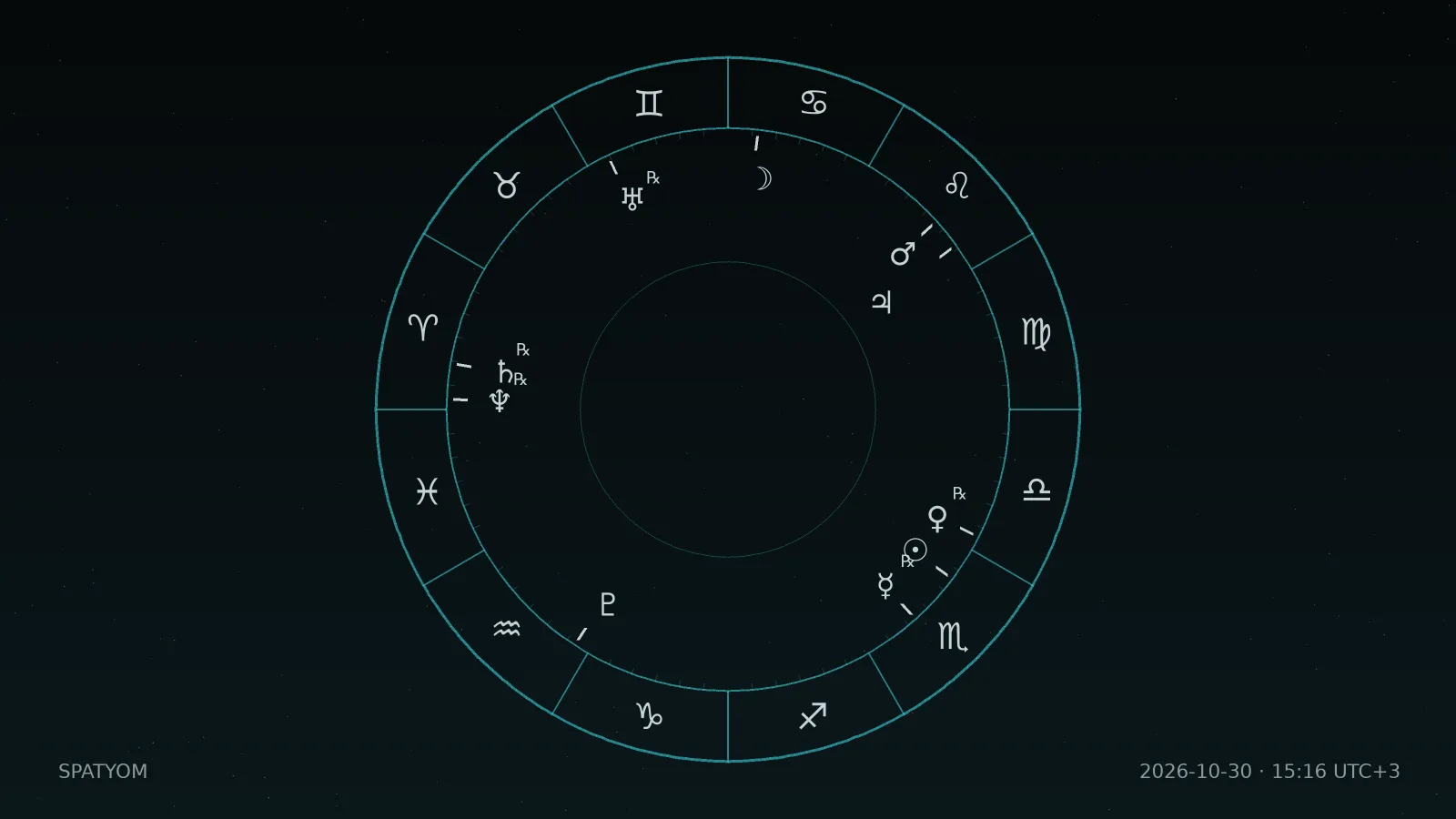
For the Northern Hemisphere, October 31 is the darkest of the cross-quarter days. This date falls in a period when days continue to shorten and nights grow longer. Ancient societies believed that on this cross-quarter day, the spirits of the dead roamed from sunset until midnight. After midnight, that is, on November 1, the spirits were thought to withdraw to rest. This narrative carries a symbolism directly tied to the increase of darkness.
Although October 31 is fixed in the calendar, the actual cross-quarter point falls on November 7. That means a difference of about a week. For the ancient Celts, the cross-quarter day was not the middle of a season but its beginning. In other words, October 31 was seen as a threshold symbolizing the start of winter. This approach made sense in a world where seasons were intertwined with agricultural and social cycles.
Today this difference stems from the historical evolution of the calendar. The mismatch between the Julian and Gregorian calendars has led to shifts in seasonal dates. Even so, October 31 has traditionally remained the celebration date closest to the cross-quarter day. This shows that astronomical events do not always coincide exactly with calendar fixings.
The Pleiades and the midnight culmination
Some researchers suggest that the origin of Samhain is rooted in the night when the Pleiades star cluster reaches its midnight culmination. The Pleiades stand out in the sky as a distinctive group of stars. When this cluster reaches its highest point at midnight, it was regarded as an important sign by ancient societies. If a connection between Samhain and this culmination is assumed, there were periods when the two events fell on the same date.
Today the midnight culmination of the Pleiades occurs around November 21. Halloween, however, is fixed to October 31. This difference arose over the centuries due to calendar changes and the motion of Earth's axis. In the 11th and 12th centuries, while the Julian calendar was in use, the cross-quarter day and the midnight culmination of the Pleiades fell around October 31. At that time the Julian calendar was out of step with the seasons by about a week. If the Gregorian calendar had been in use then, the celebration date would have been November 7.
This historical shift shows how dynamic the relationship between astronomical events and calendar dates is. The Pleiades were also used in agricultural calendars in ancient times. Their midnight culmination was regarded as an indicator of seasonal change. Although this connection cannot be observed directly today, it offers an important clue to the origins of Halloween.
Late October and early November in the sky calendar
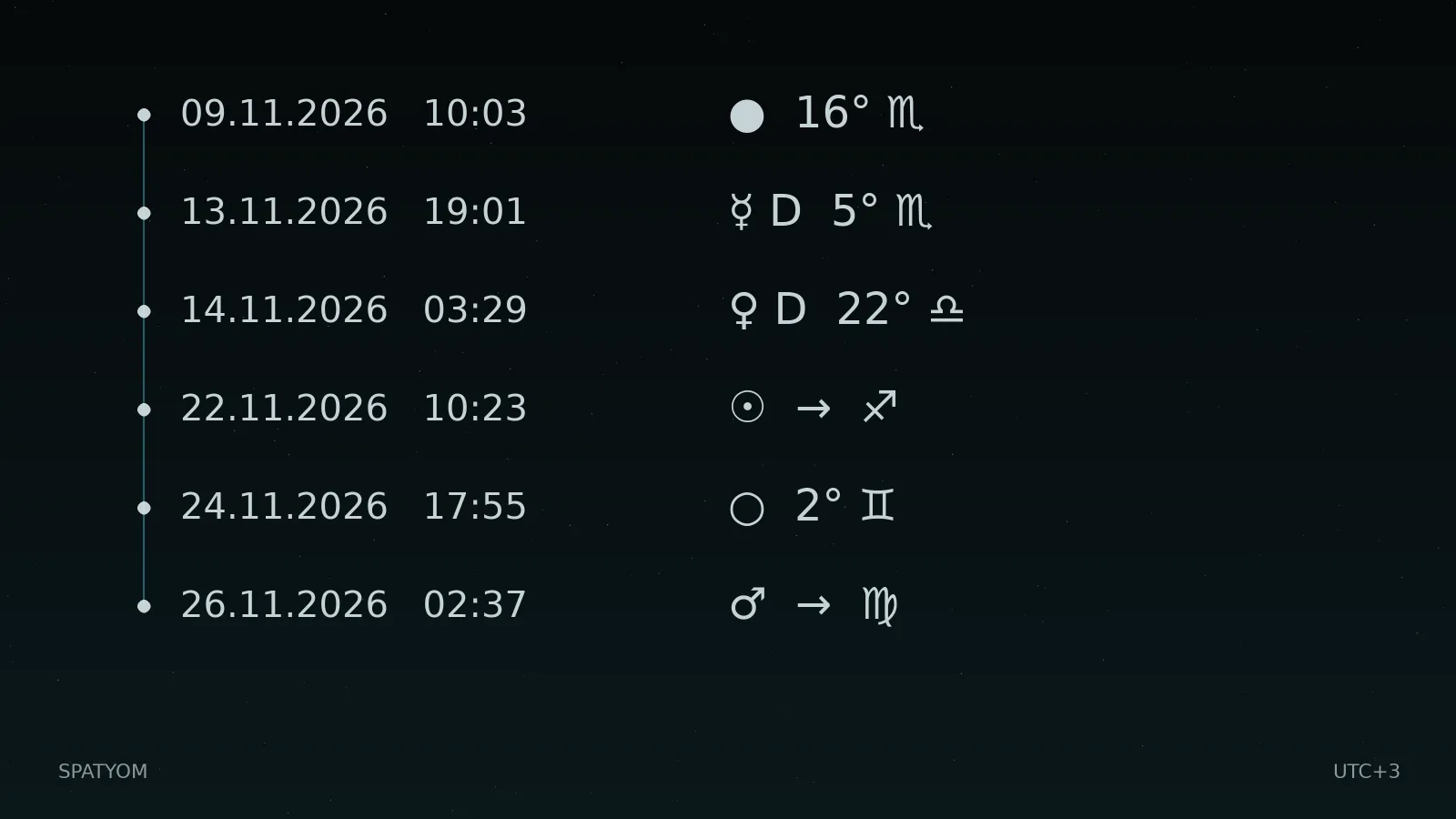
In the autumn of 2026, the sky hosts several events that carry traces of this ancient calendar. The Sun entered Scorpio on October 23; in the Northern Hemisphere, days grew noticeably shorter and nights longer. The Taurus Full Moon on October 26 has also passed. The midnight culmination of the Pleiades will occur around November 21.
On November 9 at 10:03 a.m. (TRT), there is a New Moon in Scorpio. This date is quite close to the actual astronomical position of the cross-quarter day (November 7). The New Moon offers a favorable period for deep observation in a dark sky. If you want to observe the Pleiades with the naked eye, you can take advantage of these nights when moonlight is at its least. In mid-November, Mercury and Venus go direct; this is a change of pace worth keeping in mind when planning sky observations.
These events remind us how the astronomical markers at the origin of Halloween still find their counterpart in the sky today. Even though calendar dates change, Earth's orbit and the positions of the stars maintain the same order. The sky forms the common ground of seasons and cultural rituals.
Why does it still matter?
Halloween's astronomical origin is a reflection of humanity's effort to understand the sky. Cross-quarter days were critical for agricultural societies in organizing planting and harvest cycles. Although this connection is often forgotten today, the observational tradition underlying the celebrations can still be traced. Following sky events can be a way to recall this ancient knowledge.
From an astrological perspective, such calendar markers can be used to make sense of seasonal transitions independently of planetary positions. But it should not be forgotten that astrology is a tradition of interpretation; the dates and positions of sky events can be calculated, and interpretation is built on top of that calculation. The example of Halloween is a fine case showing how astronomical observation intertwines with cultural practices.
In summary, October 31 is not just an amusement but a marker of Earth's journey around the Sun. Whether you are interested in the Samhain tradition or simply watching the sky, this date opens a door to understanding how our ancestors looked at the sky. Perhaps this year, on the night of October 31, as you watch the Pleiades rise, you will remember that you are looking at the same sky as observers from centuries ago.
Comments
No comments yet. Be the first.